


How to Fix a Sewer Line Without Digging Safely
- thetrenchlessguys
- Aug 5
- 6 min read
A sewer backup does not automatically mean your yard, driveway, or business entrance has to be excavated. Modern trenchless methods can repair many damaged underground pipes through existing access points, often preserving landscaping and reducing downtime. If you are researching how to fix sewer line without digging, the first step is not choosing a repair method. It is accurately identifying what is happening inside the pipe.
A recurring clog, sewage odor, slow drains throughout the building, wet spots in the yard, or a backup at the lowest drain can all point to a sewer line problem. Those symptoms can come from roots, a separated joint, corrosion, a belly in the line, heavy scale buildup, or a collapsed section. Each condition calls for a different solution, and trenchless repair works best when it is matched to the pipe's actual condition.
Start With a Camera Inspection, Not a Guess
A CCTV sewer inspection is the foundation of a responsible trenchless repair. A specialized camera travels through the line and provides a live view of cracks, root intrusion, offsets, corrosion, blockages, and the depth and location of the defect. This allows the technician to determine whether the pipe can be rehabilitated from within or whether a damaged section needs replacement.
For homeowners, the inspection can prevent paying for a repair that does not solve the underlying problem. For commercial properties, facilities, and municipalities, it provides documentation for maintenance planning and helps limit disruption to tenants, staff, traffic areas, or operations.
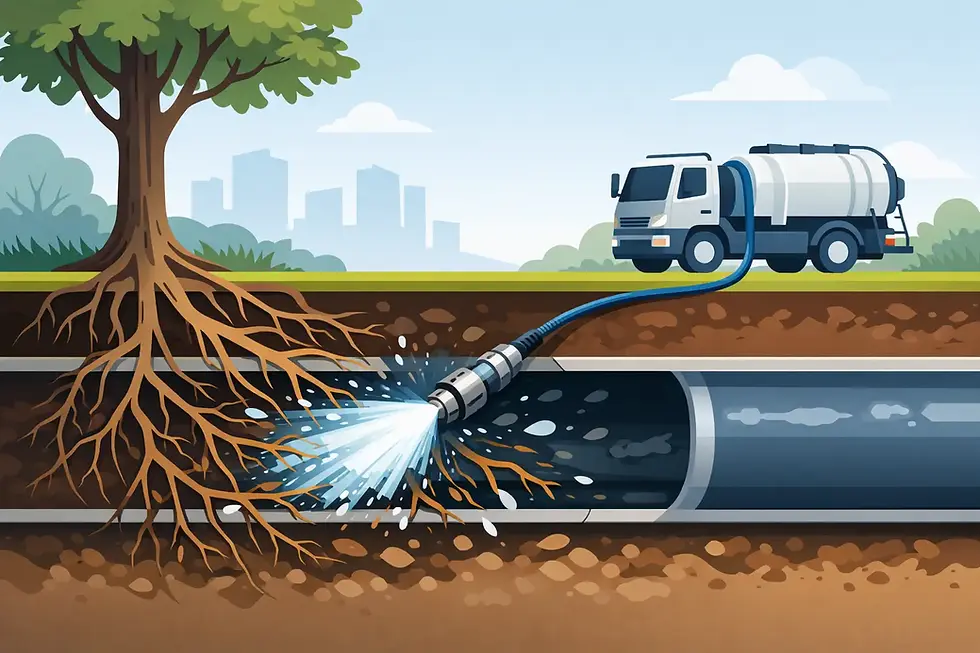
Before any lining or replacement work begins, the pipe may need sewer jetting. High-pressure water removes grease, scale, debris, and roots so the repair material can bond properly and the crew can see the full extent of the damage. Cleaning is not a shortcut or an optional add-on. It is often what makes a lasting trenchless repair possible.
How to Fix a Sewer Line Without Digging: Main Options
The two most common no-dig solutions are cured-in-place pipe lining and pipe bursting. Both avoid the long open trench associated with conventional replacement, but they solve different kinds of pipe failures.
Cure-in-Place Pipe Lining
Cure-in-place pipe, commonly called CIPP lining, creates a new pipe inside the existing damaged pipe. A resin-saturated liner is inserted through an access point, positioned along the damaged section, and cured using controlled heat, steam, or ambient conditions. Once cured, the liner becomes a durable, jointless pipe within the host pipe.
CIPP is especially useful for pipes with cracks, leaking joints, root intrusion, corrosion, minor offsets, or widespread deterioration. It can often rehabilitate a long section of sewer without disturbing finished landscaping, sidewalks, parking lots, or interior floors.
The main trade-off is that lining slightly reduces the inside diameter of the pipe. In a properly sized sewer, this reduction is usually minimal and is offset by the liner's smooth interior, which can improve flow compared with a rough, scaled, or root-filled pipe. However, a line that is severely collapsed, badly misaligned, or holding standing water because of a major belly may not be a good lining candidate.
Branch connections also matter. On many projects, a lateral launch system or reinstatement cutter is used to reopen connections after the liner cures. This is one reason experienced trenchless technicians and proper camera verification are essential, especially in multi-unit, commercial, and municipal systems.
Trenchless Pipe Bursting
Pipe bursting is a replacement method rather than a rehabilitation method. A bursting head is pulled through the old pipe, breaking it apart while pulling a new replacement pipe into place behind it. The work typically requires small entry and exit pits instead of a full-length trench.
This method is a strong option when the existing sewer is too deteriorated for lining, has collapsed sections, or needs a larger diameter. It can replace clay, cast iron, Orangeburg, and other aging pipe materials while minimizing surface restoration.
Pipe bursting still involves some digging, but it is far less disruptive than exposing the entire sewer run. The surrounding utilities, pipe depth, route, soil conditions, and available access all need to be reviewed before proceeding. In tight utility corridors or near sensitive structures, the correct approach may be a targeted excavation combined with trenchless repair elsewhere.
Spot Repairs and Internal Coatings
Not every sewer defect requires lining an entire line or replacing it. When a camera inspection identifies a localized crack, joint failure, or small damaged area, a sectional liner may provide a focused repair. This can be cost-effective when the rest of the pipe is structurally sound.
Internal pipe coatings can also be used in certain rehabilitation applications, particularly where corrosion protection or leak sealing is needed. The right material and preparation depend on pipe type, operating conditions, and the purpose of the system. A coating is not a universal substitute for a structural liner or replacement pipe.
When Trenchless Repair Is the Better Choice
Trenchless technology is often most valuable when conventional excavation would damage something expensive or difficult to restore. That may include mature landscaping, patios, driveways, sidewalks, finished basements, parking lots, loading areas, or busy commercial entrances.
For a homeowner, avoiding a full trench can mean less yard restoration and a shorter project timeline. For a property manager, it can mean keeping tenants in place and minimizing disruption. For a restaurant, medical office, manufacturing facility, or municipal site, reducing downtime can be as important as the direct construction cost.
That said, trenchless is not automatically the least expensive option in every situation. A short, shallow pipe run in an open yard may be straightforward to excavate. Conversely, a line beneath a concrete parking lot or a landscaped property may make trenchless repair the more cost-effective result once restoration costs are considered. The best decision comes from comparing the complete scope, including access, cleaning, repair, permits, bypass requirements, and surface restoration.
Conditions That May Require Digging
A reputable contractor should be direct about the limits of no-dig repair. Severe pipe collapse may prevent a camera, cleaning equipment, or liner from passing through. A major belly can keep wastewater from flowing correctly even if the pipe walls are lined. A broken line with extensive grade problems may require replacement at the correct slope.
Excavation may also be needed to install or repair a cleanout, reach a failed connection, address a pipe that has shifted beyond repair, or safely work around other buried utilities. In some cases, the practical solution is hybrid work: excavate one inaccessible failure point, then line or burst the remaining length. This still reduces the overall disturbance significantly.
What the Repair Process Usually Looks Like
Once the problem is documented, the project begins with access planning. Crews identify cleanouts, manholes, downstream connections, utility conflicts, and the best equipment setup. Commercial and municipal projects may also require traffic control, flow management, or bypass pumping so the system can remain operational during the work.
The pipe is then cleaned and inspected again. If lining is selected, the crew measures the line, prepares the liner, installs it, and cures it. A final CCTV inspection confirms the liner is properly seated, the flow path is clear, and service connections have been reopened where required.
For pipe bursting, crews prepare limited access pits, pull the bursting head and new pipe through the route, connect the new line, and test the completed installation. The final surface restoration is substantially smaller than it would be after a full excavation.
Project duration depends on length, pipe diameter, access, cleaning needs, damage severity, and whether the pipe serves one residence or a larger operating facility. Many residential repairs can move quickly once the diagnosis and access plan are complete, while commercial systems deserve more coordination to protect operations and occupants.
Protect the New Sewer Line After Repair
A trenchless repair can provide long-term performance, but it should be paired with sensible maintenance. Avoid flushing wipes, grease, and materials that do not break down. If your property has large trees near the sewer route, periodic camera inspections can catch new issues before they become emergencies. Commercial kitchens, multi-tenant buildings, and older facilities may also benefit from scheduled jetting based on actual usage and pipe condition.
The practical goal is not simply to avoid digging. It is to restore a reliable sewer line with the least disruption necessary. A thorough camera inspection and a contractor with specialized trenchless equipment will show whether lining, bursting, targeted excavation, or a combination of methods gives your property the most durable path forward.


Comments