


CIPP Durability and Pipe Lining Service Life
- thetrenchlessguys
- Aug 9
- 5 min read
A sewer repair is only valuable if it stays repaired. For homeowners, facility managers, and property owners, CIPP durability is the central question behind cure-in-place pipe lining: Will the new liner hold up to daily use, groundwater conditions, and decades of wastewater flow without requiring another major repair?
When the pipe is a good candidate and the work is completed correctly, CIPP lining is designed to provide a long-term structural rehabilitation solution. It creates a new, jointless pipe inside the damaged host pipe, sealing cracks, covering separated joints, and restoring the flow path without excavating a yard, parking lot, floor, or roadway. However, the expected service life depends on more than the liner itself. Inspection, preparation, material selection, curing, and the condition of the original pipe all matter.
What CIPP Durability Means in Real-World Repairs
CIPP, or cured-in-place pipe, uses a resin-saturated liner that is installed inside an existing sewer or drain line. Heat, steam, hot water, or ultraviolet light is used to cure the resin. Once cured, the liner becomes a hard, continuous pipe within the old one.
A properly engineered and installed CIPP liner is commonly expected to serve for 50 years or more. That estimate is not a blanket promise for every underground line. It reflects the intended design life of a quality liner system installed under suitable conditions. A residential lateral with normal household use has different demands than a commercial kitchen line exposed to grease, a municipal sewer with high flow volumes, or an industrial line carrying chemical discharge.
The practical benefit is clear: rather than repeatedly spot-repairing roots, cracks, and leaking joints, a liner can rehabilitate an extended section of pipe in one project. It also eliminates the joints that often become future entry points for roots and groundwater.
The Factors That Affect CIPP Durability
The finished liner is only as reliable as the process used to install it. Advanced equipment is important, but careful field execution is what protects the long-term result.
The condition of the existing pipe
CIPP does not require the original pipe to look new. In fact, it is often selected because the host pipe is cracked, offset, root-infiltrated, corroded, or leaking. The remaining pipe must still provide enough alignment and access for the liner to be installed and cured correctly.
A camera inspection identifies defects, pipe diameter, changes in direction, active infiltration, connections, and potential obstructions. Severe collapses, substantial missing sections, or a pipe with no usable pathway may need localized excavation, pipe bursting, or another repair method before or instead of lining. A reliable contractor should explain that distinction instead of treating CIPP as the answer to every sewer problem.
Thorough cleaning and preparation
The liner must make close contact with the inside of the host pipe. Scale, heavy grease, roots, hardened debris, or protruding service connections can interfere with that fit.
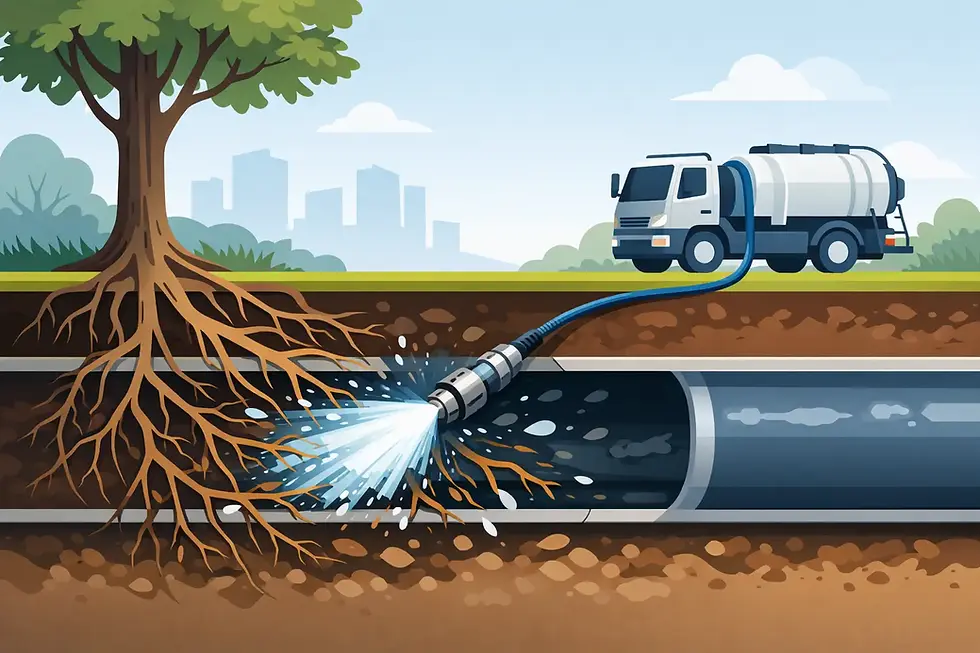
Professional sewer jetting and mechanical cleaning remove buildup before installation. Roots may need cutting, and damaged sections may require additional preparation. Skipping this stage can reduce flow, create imperfections, or prevent the liner from bonding and conforming as intended. Cleaning is not an add-on detail. It is part of the durability of the finished repair.
Correct liner and resin selection
Not every pipe needs the same liner thickness or resin system. The proper design accounts for pipe diameter, length, depth, groundwater pressure, soil loads, pipe shape, bends, and the type of material traveling through the line.
For example, a residential sanitary sewer lateral may need a different specification than a commercial drain line with recurring high-temperature discharge or chemical exposure. Material compatibility matters. So does selecting a liner that can carry structural loads where the existing pipe has lost strength.
A lower-cost installation that uses an underspecified liner may look acceptable at first but offer less protection over time. Good trenchless work starts with matching the system to the actual conditions underground.
Controlled installation and curing
During installation, the liner must be positioned correctly, expanded evenly, and cured according to the resin manufacturer's requirements. Temperature, pressure, cure time, and cooling procedures all affect the final product.
If curing is incomplete or inconsistent, the liner may not achieve its intended strength. Experienced crews monitor these conditions and verify the result with post-installation CCTV inspection. That final camera work confirms that the liner is continuous, properly seated, and free of major defects before the job is closed out.
Ongoing use and maintenance
A lined pipe resists root intrusion because it has no joints along the rehabilitated section. It is not immune to misuse. Flushing wipes, grease, hygiene products, paper towels, or other non-flushable materials can still create a blockage. In commercial settings, grease control and scheduled cleaning remain necessary even after a pipe has been lined.
The surrounding system also matters. A newly lined lateral will not correct a blocked municipal main, a damaged branch line outside the lined section, or a drainage issue caused by an improper slope elsewhere in the system.
How CIPP Holds Up Against Common Sewer Problems
CIPP is especially effective against the failure patterns that make older clay, cast iron, Orangeburg, and deteriorating PVC lines difficult to maintain.
Root intrusion is a common concern across North Central Ohio, where mature trees and aging sewer infrastructure often share the same property. Roots typically enter through failed joints and small cracks. A continuous liner covers those openings and provides a smooth interior surface that makes repeat intrusion far less likely within the lined area.
For corroded cast iron, lining can seal rough interior surfaces, pinholes, and leaks while improving flow. For cracked clay pipe, it can bridge joints and fractures without trenching through landscaping or hardscape. Where groundwater is entering the sewer through defects, a properly installed liner can help reduce infiltration that contributes to system loading and recurring backups.
There are limits. If a pipe has significant bellies, the liner will follow the existing grade. It does not raise a low spot or correct a major slope problem. If there is a full collapse, the line may need excavation or pipe bursting. A camera inspection is how those conditions are identified before recommending a repair path.
Is CIPP a Durable Choice for Residential and Commercial Properties?
For many residential properties, CIPP offers a durable repair with the added advantage of preserving lawns, driveways, landscaping, and finished spaces. A sewer lateral can often be rehabilitated through existing access points, reducing the disruption associated with open excavation.
For commercial properties, durability includes operational continuity. A liner can be especially valuable when the pipe runs beneath a building slab, parking area, production floor, tenant space, or heavily used entrance. Reducing excavation can mean less downtime, fewer restoration costs, and a more controlled project schedule.
Still, the best method depends on the line. Pipe bursting may be the better choice when a severely damaged pipe needs full replacement or an increase in diameter. Spot repair may make sense for an isolated accessible defect. CIPP is strongest as a solution when the pipe can be cleaned, accessed, and structurally rehabilitated over a meaningful length.
How to Protect the Life of a Lined Sewer Pipe
After a lining project, treat the pipe as a long-term asset rather than a repair to forget about. Use the system as intended, avoid flushing materials that do not break down, and keep grease out of drains. Commercial kitchens and high-use facilities should maintain grease management and planned sewer cleaning based on their actual use patterns.
If the property has a history of backups, periodic CCTV inspection can confirm that the lined section remains clear and help identify problems in unlined branches or downstream mains. This is particularly useful for older properties with multiple generations of plumbing materials.
When evaluating a contractor, ask how the line will be inspected, cleaned, measured, cured, and verified after installation. The answers should be specific. A durable CIPP result comes from a disciplined process, not simply placing a liner in a pipe.
For Akron-area property owners, the right next step is a detailed camera inspection that shows exactly what is happening below grade. That diagnosis makes it possible to choose a repair that protects the property now and supports dependable sewer performance for years ahead.


Comments